Ranking Every Legend of Zelda, Now That I’ve Finished Them All (PART I)

Well, that took forever.

I’ve dragged my feet a bit on this one, for all kinds of ever-changing reasons over the years. But the time is right at last. As far as this site is concerned, 2026 was already shaping up as a year for writing about decades-old games, and now at long last Nintendo has officially acknowledged the Legend of Zelda series’ 40th anniversary. So I finally polished off the last 8-bit piece of my personal mainline Zelda puzzle last week, and now we are doing this.

40 years after the first Legend of Zelda changed the videogame landscape, 26 years after I played my first Zelda game, 13 years after I finished my tenth and then immediately wrote up my first top ten Zelda countdown, and just over a month away from an ambitious remake of the series’ most iconic entry, the job is complete: I can say that I have finished all of the Legend of Zelda games released up to this very point in my life. And in 2026, that happens to mean twenty-one of them. I’m signing myself up for an awful lot of writing, but it sounds like a pair of almost-even countdown posts to me!

A quick technical note for any newer Zelda enthusiasts: traditionally these ranked lists only include videogame titles with the phrase “The Legend of Zelda” in them, with the notable exception of the second game, which uses the prefix “Zelda II”; everything else is counted as a spin-off. That’s also the way I look at it, so you won’t see the likes of the Hyrule Warriors games here.

Furthermore, ports, remasters and remakes are not treated separately from their original releases for the purposes of this ranking, and are only mentioned when relevant to a particular point. Finally, this ranking is entirely based on my personal opinion, which unavoidably invokes emotions and memories that make it extremely unlikely to line up with yours. Plot details may also be discussed occasionally. Please enjoy.

First Completed (GBA): 2003

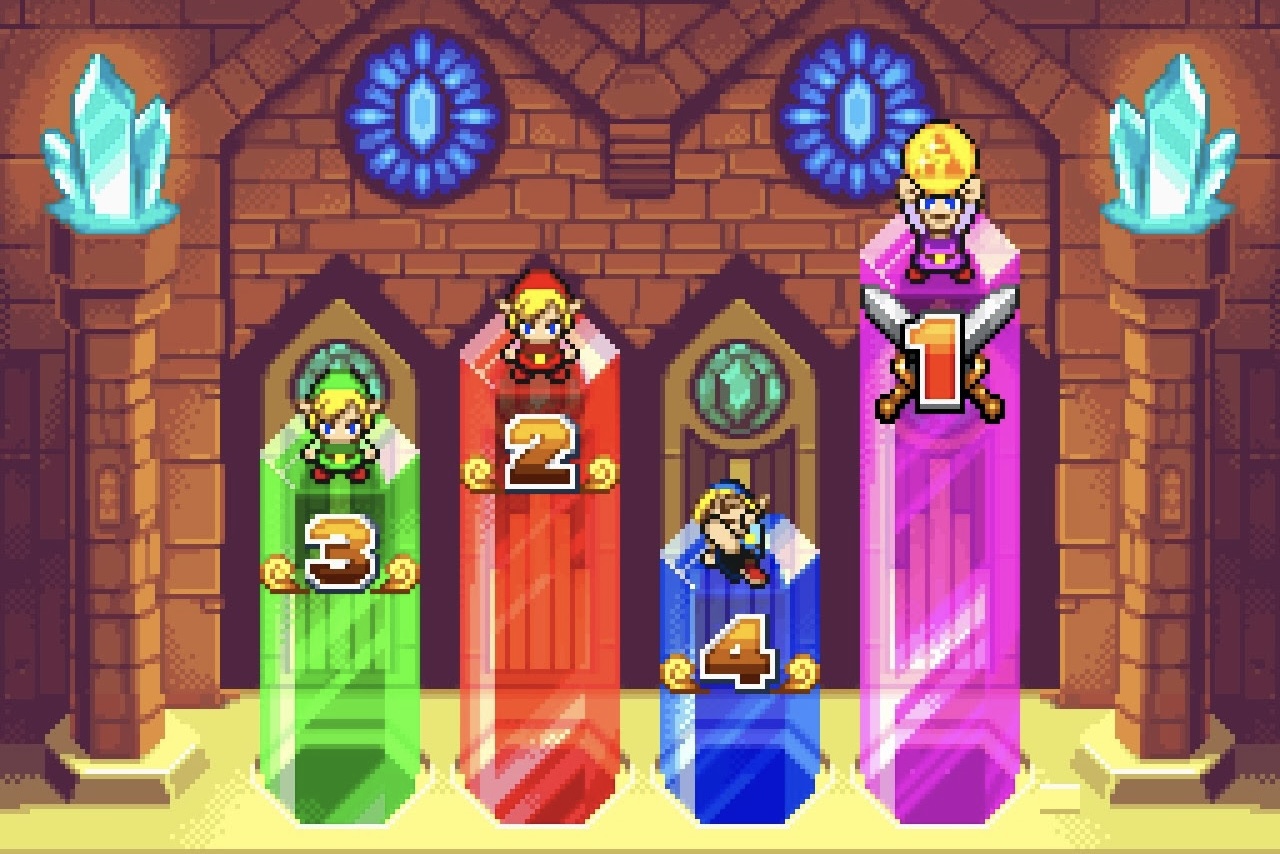
It feels like the eternal – if accidental – punching bag as far as my personal rankings are concerned, but I still have such warm memories of playing through The Legend of Zelda: Four Swords with a friend over two decades ago, so I have to hit you with that time-honoured Zelda ranking cliché from the very first entry in the list: All the Zelda games are pretty good, but something has to be last.

In this case, all the trailblazing inventiveness in the world from long-dead Capcom offshoot Flagship – who are incidentally responsible for almost a fifth of all Legend of Zelda games – cannot save Four Swords from the inherently restrictive structure that just happened to stop me from playing through the whole thing with four players as the developers intended. I also have never played Grezzo’s 2011 single-player-enabled remaster, because that year was absolutely stacked with Zelda content already and I didn’t see the need.

As the first mainline multiplayer Zelda game, Four Swords felt incredibly fresh at launch, even if subsequent games have improved on the concept. The fact it was packaged with the GBA version of Link to the Past made it as much of a marketing masterstroke as the Medals of Courage system was a gameplay one. The title represented the first instance of elementary procedural generation my young eyes had ever witnessed, and the puzzle design is often a match for anything else you might find among the 2D Zeldas. It also features the best of an exceptional class of Flagship title-drop animations, accompanied by possible the single best second of sound design on the GBA. So there’s also that. But something has to go here.

First Completed (NES on NS): 2019

These days as soon as you discuss the oldest of the Zelda games on NES – actually, as soon as you discuss arguably any game on NES or a platform of similar power – the subject of restore points and other modern emulation conveniences becomes a bit of an elephant in the room. Well allow me to rip the band-aid off: you can assume I made liberal use of the restore points within the Nintendo Switch Online app for any older game that appeared on the service before the completion year written under each Zelda game’s title across this article.

Now that we’ve got that cleared up, Zelda II: The Adventure of Link perhaps required more use of emulation restore points than any other game I’ve played. AoL isn’t just known as a black sheep of sorts due to its deviance from the series’ naming convention (which, to be fair, wasn’t yet the naming convention when it first released); it’s also structurally bizarre in a way that places combat front and centre like nothing else in the mainline canon. It joins the likes of Final Fantasy II, Dragon Quest II, and (in the west) Super Mario Bros 2 as a wildly experimental second entry in a franchise that would go on for decades afterwards by essentially ignoring everything attempted in that entry.

Dark Souls creator Hidetaka Miyazaki famously cited the very first The Legend of Zelda as his principle influence while formulating the series, but it is the immediate sequel that arguably feels even more Souls-like to play through in the modern era: combat is the overwhelming focus over puzzle design, there’s a rudimentary stat system that rewards either pure skill or the brute force of the grind, even well-hidden and overpowered limited-use magic spells play a role. The Adventure of Link may feel the least like a Zelda game of any title on either half of this countdown, and I’m glad it didn’t turn out to be the blueprint for the series going forward, but I must admit it is mighty satisfying to clap that Thunderbird.

First Completed (DS): 2018

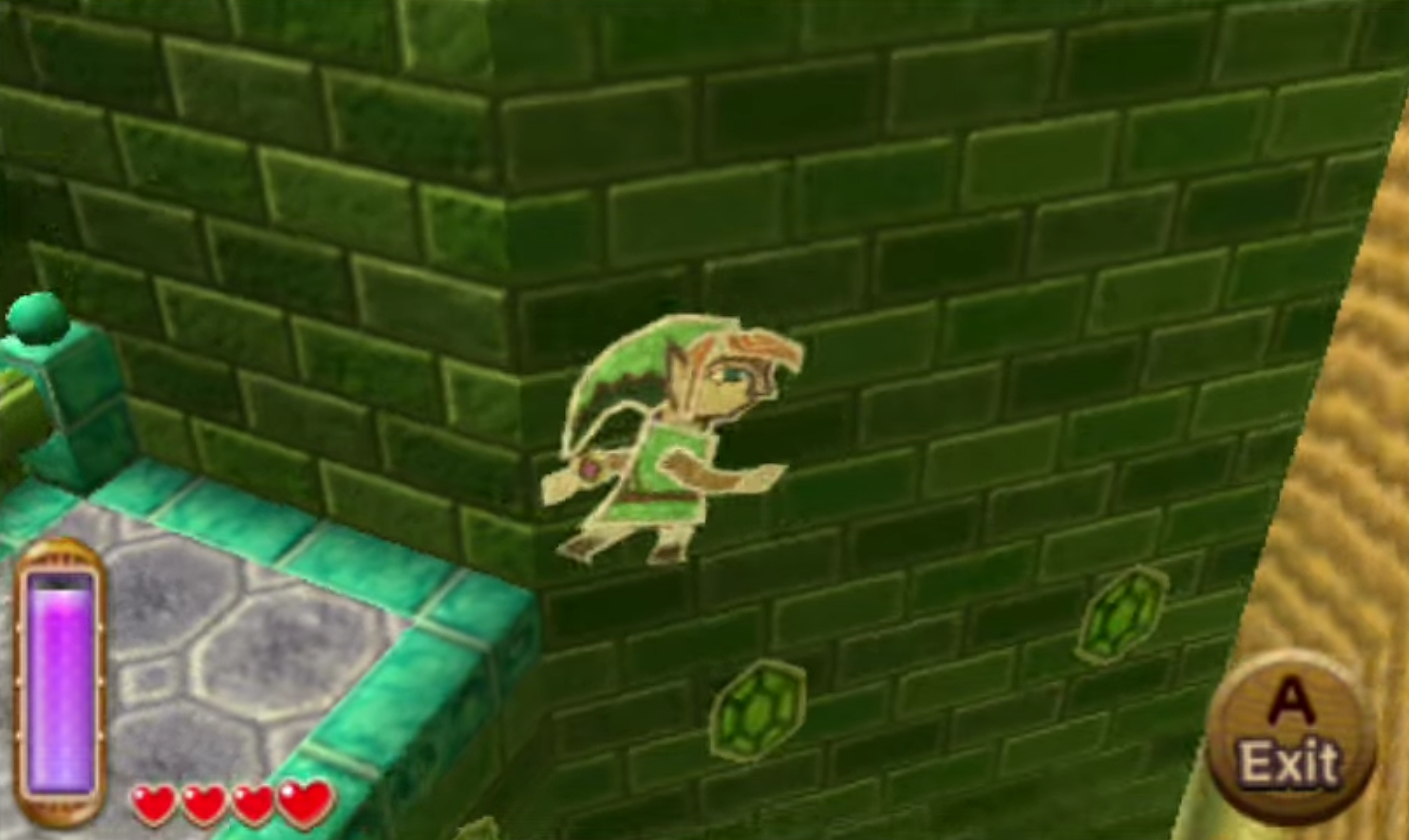
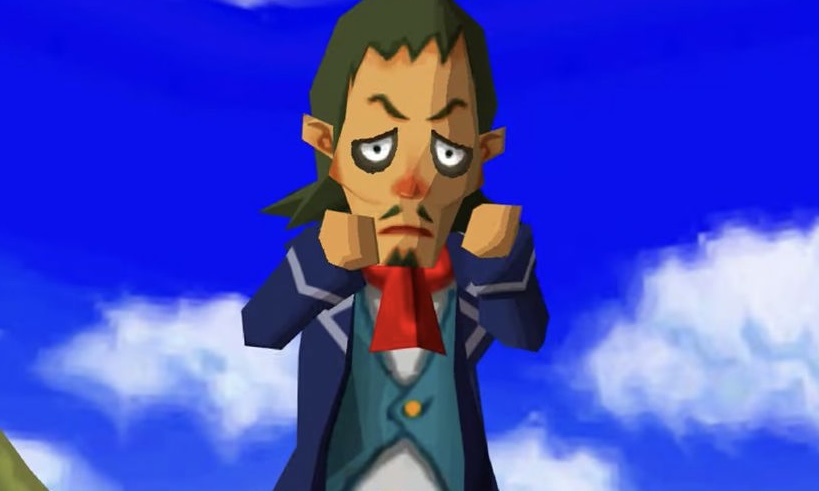
Yeah sure, let’s put the two black sheep of the Zelda series back-to-back; super original countdown idea, man. And yet, considering all the negative feelings I had towards this game for a solid decade after it thoroughly disappointed me at launch, the fact it isn’t dead-last represents a character arc worthy of Linebeck himself. To date Phantom Hourglass is the only Zelda game I have ever outright given up on before seeing the credits; its late 2007 release initially made it seem like the perfect celebratory holiday title, but some major structural design whiffs put the game to bed for me until 11 years later, when a colleague re-framed the game for me with a refreshing pitch and I completed it at last.

The day I reached the end of Phantom Hourglass in early 2018 was the day I knew it might be possible for me to one day go back and finish every Legend of Zelda game, because when I tell you this one boiled my teenage blood upon release, I’m only slightly exaggerating. The Temple of the Ocean King, which gradually unlocks more of its secrets after every main dungeon but must be restarted every time, is almost entirely to blame for this, but the unusually bland colour palette, soundtrack, and story do not do the game any favours.

Proper expectations helped a ton on the second go-around, however, and the game does actually have plenty to offer. The touch controls are almost perfect, especially when using items (at least on a stylus-capable platform like the DS, 3DS, or Wii U), the boss fights are amazing, several of the puzzles are devious – including that infamous clamshell stamp moment – and the arc/musical theme of Link’s sailing companion Linebeck makes him genuinely one of the most memorable characters in the series. Finally, there’s the surprisingly addictive collectable ship part economy, which deserves a big mention because trading parts with that aforementioned colleague was the main feature that kept me pushing through the worst parts of the game. Nintendo simply does not respect loot systems enough.

Continue reading

Ten More 2026 Movies Summarised in Ten Words Each

It feels like forever ago and it feels like yesterday that we last did this, but what else is new?

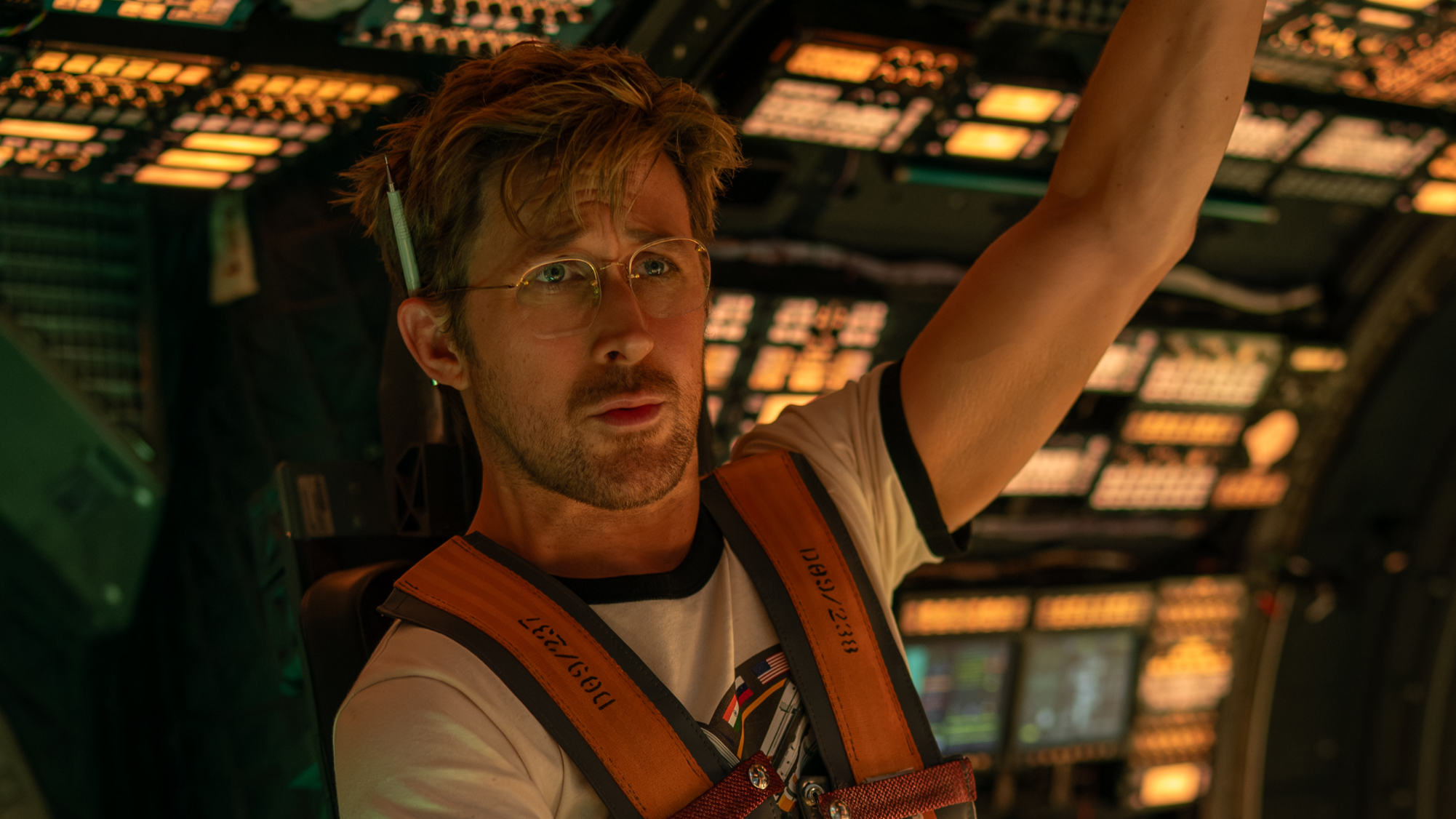
I happened to be overseas at a pretty bad time for some of the big Northern Hemisphere summer movie releases this year, and so completely missed the likes of Supergirl, Masters of the Universe, Disclosure Day, and Toy Story 5. Had I caught them all, this post would’ve been out even faster, but as it stands it still feels like I’ve seen a deluge of interesting premises unfold on big, very big, small, and very small screens alike these last few months.

Whether those premises result in compelling cinema has been another story: this particular batch of ten films lacks an outright dud, but still feels like a roughly even split between “eh, maybe” to “absolutely, 100%, see you at the end of the year for the awards”.

1 2 3 4 5 6 7 8 9 10

How to Make a Killing

“Weird that Glenn Powell has done two passionless murder comedies.”

The Mandalorian and Grogu

“Like four combined Mandalorian episodes; the first and third work.”

SEE MORE

DK 64 in a Resurgent DK World

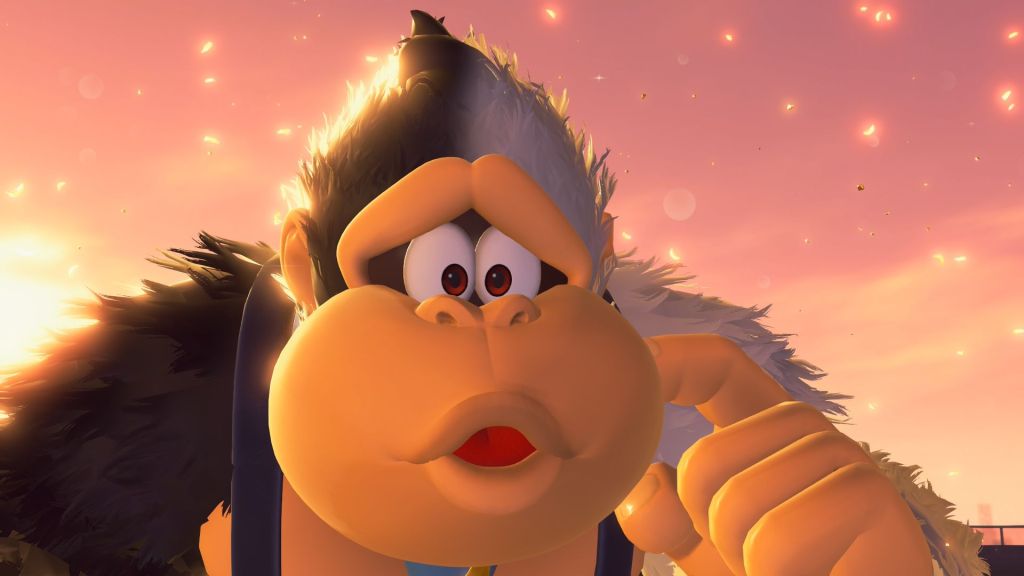
I don’t know if this small-yet-immutable fact blows your mind like it did mine, but last week marked one year since the release of Donkey Kong Bananza on the Nintendo Switch 2. Oh, how much the videogame industry has changed in just twelve short months…

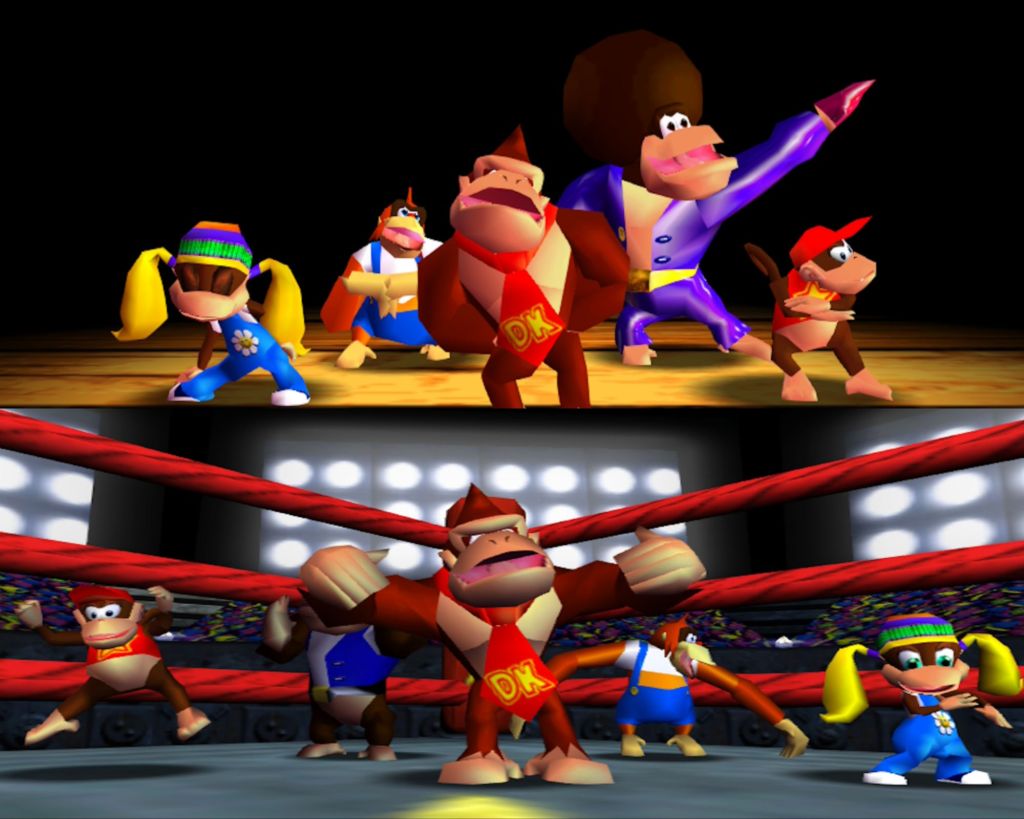
Bananza was once a pipe dream. Eleven years ago, when I lost over a week to the surprise Virtual Console re-release of Donkey Kong 64 on the struggling Wii U, I had very little hope of glimpsing a properly three-dimensional DK game anywhere near the horizon. The critically-acclaimed and commercially-ignored DK Country: Tropical Freeze was barely a year old at the time, and insofar as the once-prolific Nintendo mascot had any future prospects, they appeared to be strictly 2D (Little did I know the Kong was about to endure a considerable major release drought worse than I could have imagined).

And so I latched onto that 2015 shadow-drop hard: the murky legal waters of Microsoft-owned Rareware development assets had long made the concept of a retro Rare release on a modern Nintendo platform seem like a pipe dream, and even the general concept of a sudden “out-now” release was still pretty new to the videogame space. It was an exhilarating dive. I came out the other side of a 20-hour play time blur and landed at my PC, eager to write about the game from the angle of exploring its most widely-accepted criticisms.

At the time, the makings of a wave of nostalgia-powered “3D collect-a-thon” revivals were gathering momentum within the indie scene, and so it felt apt to ask “Did DK 64 Kill the 3D Collect-a-thon Platformer?” The short answer was, as you might expect, no; the game’s occasionally over-ambitious design shortcomings merely made it an excellent scapegoat during a time of turbulent transformation in the industry.

Yet there was a fair amount left unsaid about the game in that article, and much more has changed for Nintendo’s oldest mascot in the years since. We have just witnessed the second official re-release of the game on the Nintendo Switch / Switch 2 just over a month ago, and within the context of the mid-2020s, this curious former black sheep of both Rare’s platformer catalogue and Nintendo’s Kong plans suddenly seems like much less of an oddity. I’m also a decade older now, so there’s that too.

And so, for the second time this year, I have defied a core part of my personality by dropping all the 2026 games I’ve been trying to juggle in favour of a decades-old title I know extremely well, in the hope of gaining some new insights by experiencing it within a vastly different modern context. With Nintendo just weeks on from its second direct re-visitation of Starfox 64, and an even more significant third take on Ocarina of Time steadily approaching, I find myself revisiting a game to which I have already dedicated an entire article. I did not think I would be in this position, but life, much like Nintendo, will do weird shit.

Continue reading

Close Enough, Welcome Back E3

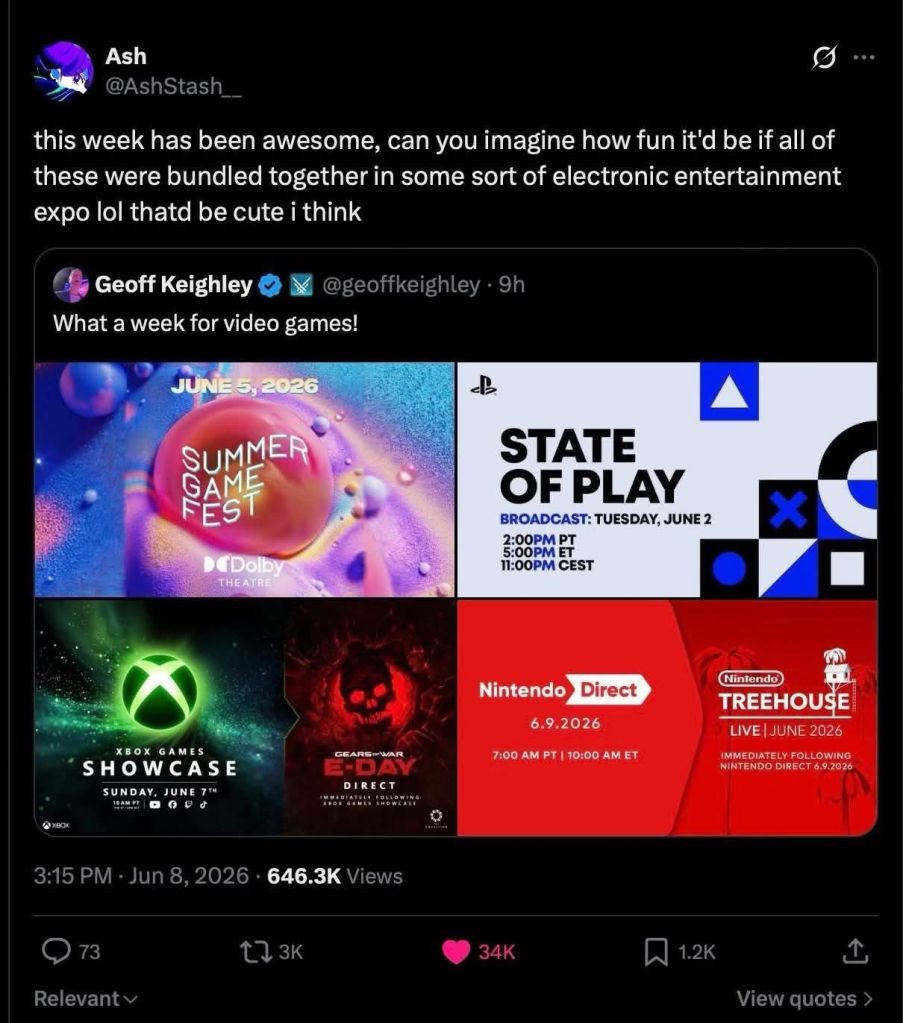
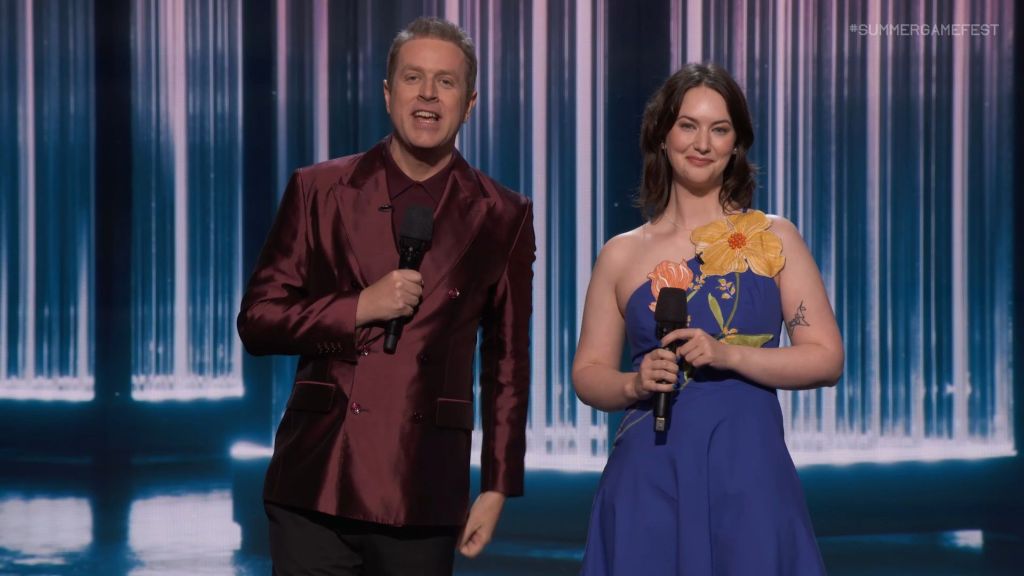
It took eight years, and we have gotten pretty close at a few points along the way (most notably in 2023), but we are back. For the first time since Playstation ostensibly abandoned June’s traditional big summer blowout, the pandemic shuttered the classic Los Angeles showcase branding, and Geoff Keighley began his Summer Game Fest initiative, the traditional console gaming “Big Three” have brought their presentation A-game within the same week, just as Keighley himself finally nailed a Game Fest show worthy of matching hype with the finest of his annual Game Awards celebrations.

There may be a thick cloud of sobering economic realities hovering over the videogame industry right now, but for the entirety of this past week, just about every major publisher added enough of its own flavour to spawn a banquet that delivered on hype, spectacle, and dare I say even joy, with old-school panache. At least for one 7-day period (give or take) in 2026, the real spirit of E3s past was alive and well.

Let’s dig into what we learned!

Dates, Dates, Dates

On the morning of June 3rd, just before the Sony State of Play kickstarted the rapid announcement season, the GTA-free September 2026 release schedule looked promising but just about manageable. We knew ex-CD Projekt dev darling The Blood of Dawnwalker was set to bring it in and Marvel’s Wolverine would own its midpoint, but the rest of the month’s offerings – while meaty in prospect – seemed targeted at specific niche audiences: Phantom Blade 0 for the soulslike fans, Dawn of War 4 for RTS sweats, and Trails in the Sky 2nd Chapter for the JRPG sickos like me.

Just over an hour later, suffice to say that was no longer the case – and the situation only got worse over the ensuing days.

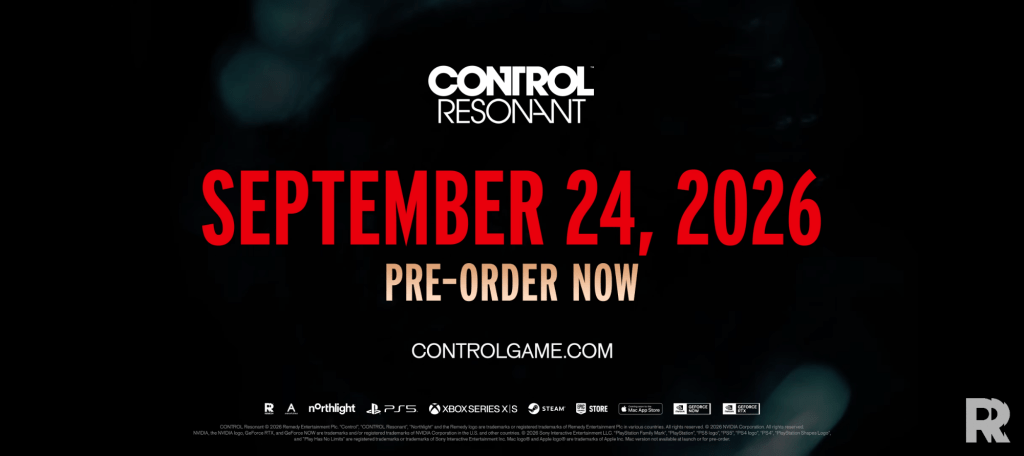
Despite a Phantom Blade 0 delay into late October, Playstation’s big summer showpiece was the scene of a brutal calendar crime that had any prospective player with a wide genre lens reeling. The extremely exciting character-action-flavoured Control Resonant now awaits Alan Wake universe stans on September 24th, but so does Silent Hill Townfall, Konami’s first entry in their resurgent survival horror juggernaut since last year’s trailblazing Japanese side story. Kings of 2026 Capcom have seen fit to release Onimusha: Way of the Sword, the next game in their ongoing hit streak, just one day after this double-whammy. And the debut of the gorgeous Rayman Legends Retold at the Sony show hardly helped the big picture, as the ground-up remake of my favourite 2D platformer of all time will launch less than a week later, on October 1st. Oh, and Ace Combat 8 is due the day after that. It’s a lot.

But by the end of the main Summer Game Fest show, Day of the Devs, the Xbox Games Showcase, and the Nintendo Direct, September had also added co-op retro-sci-fi gem Orbitals to the 3rd, ambitious 2D/3D hybrid platformer Screen Bound to the 10th, Napoleon shooter Valor Mortis to the 24th, Minecraft Dungeons II to the 29th, and most upsettingly both Trine 6 and Fire Emblem: Fortune’s Weave to that treacherous 17th (Trails day; nothing can help me now). October has also filled out somewhat (both Gears E-Day AND Star Wars: Galactic Racer on the 6th feels mean), but the real undersold ambush seems to be on the 27th of August, when the second volume of the Metal Gear Solid Collection will fight it out with A Plague Tale: Resonance, Brigandine Abyss, and Star Wars: Zero Company (two of those are tactical RPGs, by the way). Yes, not only is “September” insanely stacked, it effectively goes for six weeks this year. Publishers really are scared of GTA VI…

…And a Long-Held Promise For the Future

The Sony State of Play did also feature some goodness outside of September 2026, including the welcome return of the Stuntman series and an unexpected full-on numbered sequel to Until Dawn that looks far enough along to make its purported 2027 release window. But in a sign of things to come, the star of the show was a 20-odd-minute showcase of next year’s mythology-mashing God of War: Laufey, and there’s just something so warmly nostalgic about looking at a single extended gameplay demo in early June, wide-eyed in the freezing early morning while wrapped in a blanket or hoodie.

Perhaps emboldened by the positive reception to last year’s long look at The Witcher 4, the hotly-anticipated Final Fantasy VII Revelation reveal at the very end of the main Summer Game Fest show was treated as its own extended blowout, and Xbox doubled up on the deep-dive trend by both beginning and ending their show with long, unbroken looks at Gears of War: E-Day. While the presenting choice flies in the face of recent years’ strong rapid-fire videogame shows, I think there’s still room for a bit of a slower zoom-in on a massive IP now and then; if nothing else, it shows immense confidence on the part of the presenter.

Continue reading

Ten 2026 Movies Summarised in Ten Words Each

For the last five years, this now-traditional first batch of minuscule movie reviews has reliably appeared later and later into the year; mid-May, however, is so late I’m almost getting nostalgic for the awful 2020/21 days. Back then the schedule was so dry that every new release film felt like a huge win, regardless of quality, leading up to a spring-loaded 2022 slate that launched me to 20 movies by the time June had begun.

Of course that’s not what’s happening right here in 2026; Pokémon’s 30th anniversary and a steadily unfolding all-time year for Capcom have simply provided ample writing material, so I haven’t had to break away too much from either my particular genre wheelhouse or the major hyped-up film releases of the year so far. I didn’t even need to look for a streaming-only movie to fill any gaps: for the second year running, these first ten films were all theatrical visits. 

The release schedule is definitely about to ramp up for the American summer, but right before things really get going, here are some micro-thoughts on what I’ve seen up till now in 2026.

1 2 3 4 5 6 7 8 9 10

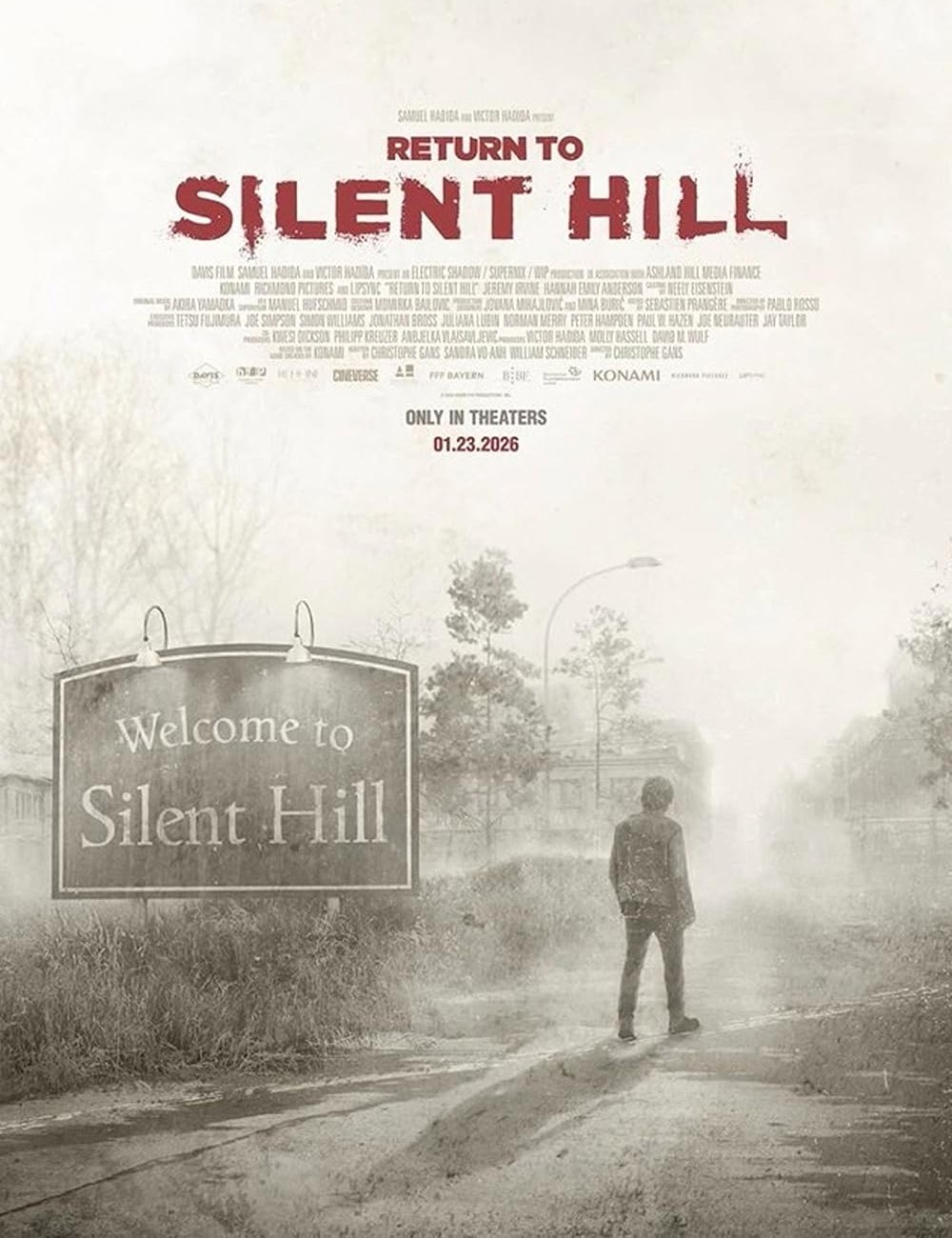
Return to Silent Hill

“Just play Silent Hill 2 instead, unless you’re morbidly curious.”

“Wuthering Heights”

“Looks phenomenal, but those quotation marks do some HEAVY lifting.”

SEE MORE

Pokémon Champions Pays Off 15 Years of Hype

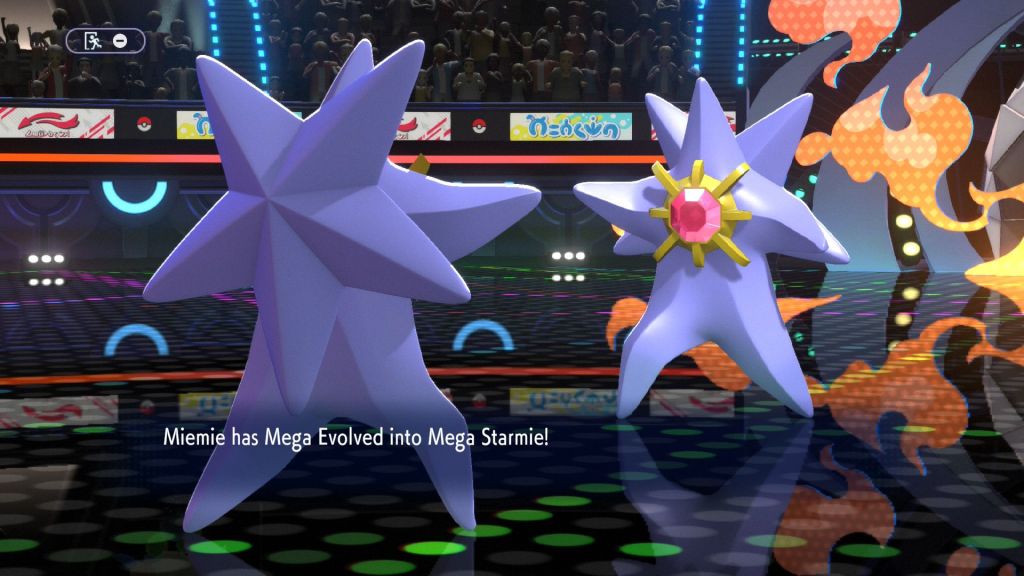
As I put down the controller and sit down to write this opening paragraph, I’ve just reached the Master Ball Tier on the Regulation M-A ladder in Pokémon Champions, Game Freak’s new free-to-play dedicated competitive Pokémon battling game. Forty hours of playtime have elapsed in just over a week since the game’s April 8th launch, more than I’ve spent on the rest of the year’s brand-new releases combined (and at the time of publication, that number has shot well past 70). Those dense hours have reintroduced me to an emotional rollercoaster I have not ridden since 2016, when I experienced the fateful launch of Overwatch and then was successfully convinced to play League of Legends for six months.

When you really try to get good at a competitive pursuit, you dig things up inside yourself; you learn a fair bit about the bounds of your patience, your tolerance for tilt. Sometimes you are so frustrated at yourself the only sane play is to stop playing. But sleep on it – even just take a break for some work or a snack – and suddenly you have the greatest idea ever, ready to try against the ever-evolving monolith of faceless online opponents that make up the metagame. It’s currently rather difficult to stay away from the considerable gravity of Pokémon Champions – especially because the list of mental skills it demands does not include fast-twitch reflexes.

But this present compulsion has not simply arisen out of nowhere for me: extremely far from it. In fact in many ways, Champions is the culmination of at least fifteen years worth of personal interest in the proper competitive side of the main series Pokémon videogames, and it feels truly surreal to experience such a gigantic – if hardly perfect – payoff.

The Esport Within

The well-documented key to Pokémon’s success as the biggest media franchise in the world is its one-of-a-kind universality: this very 30th anniversary year, barely a third over, has painted a perfect picture of that power. As the Trading Card Game rides the surprisingly bountiful crest of its biggest wave in history, cosy dream-building game Pokémon Pokopia has recently and rather loudly added itself to the growing list of Nintendo Switch 2 critical / commercial darlings mere weeks after a bald-faced nostalgia push landed the 20-year old Fire Red and Leaf Green on the Switch top sellers list (but I would know absolutely nothing about that). All this while the animated TV spin-offs and exclusive merchandising collaborations continue to proliferate across every major brand imaginable, and mobile sensation Pokémon GO somehow approaches its tenth anniversary.

No matter if you’re in it for the plushes, the fancy threads, the short animated stories, the shiny cardboard, the real-world step-grinding, the button-mashing pixelated playthroughs, or the adorable post-apocalyptic friendship fables, Pokémon can kind of be whatever you want it to be. And to me, it is primarily (though by no means exclusively) a source of thrilling tactical multiplayer.

I am old enough that my Pokémon fandom started more or less on the ground level, where Game Boy link cables were a common school playground sight. For me and my friends, catching Mewtwo in Red, Blue or Yellow version was not the end of the Pokémon experience – merely a dramatic precursor to the experience of using it against a human rival. PvP was always a core part of the Pokémon videogame experience as far as I was concerned, and once Gen III arrived to a world where my siblings were old enough to play alongside me, battling became a core component of the Day 1 new-release vibe as well.

Continue reading

From Fire: A 30th Anniversary Pokémon Replay

Pokémon stops for no man.

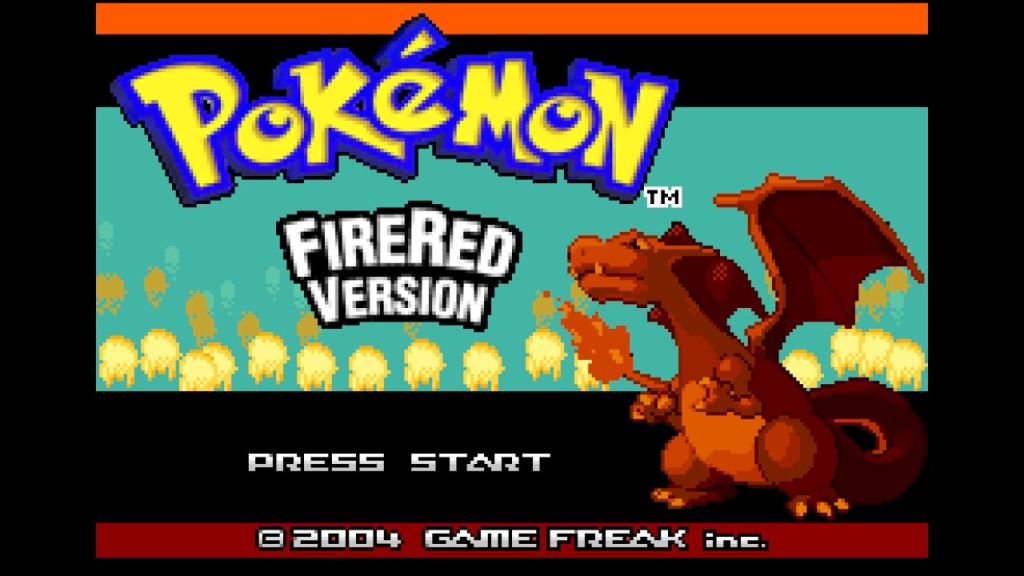
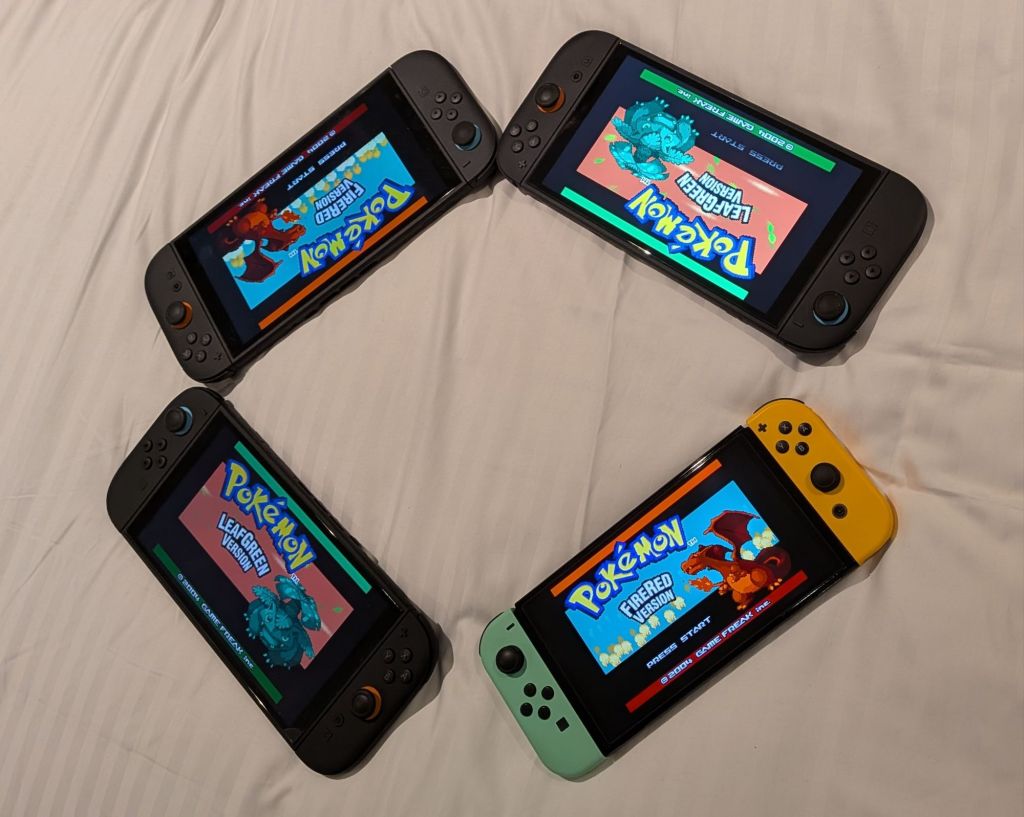
In a move that is still rather ambiguous in the extent of its planning, The Pokémon Company saw fit this Pokémon Day to re-release Pokémon Fire Red and Leaf Green in an official digital capacity on the Nintendo Switch. I don’t generally like to replay videogames, but the main series Pokémon titles are a pretty reliable exception given how different they can feel each time depending on the player’s team composition. I did, however, replay Leaf Green on cartridge barely 18 months ago in conjunction with my first Game Boy Micro experience, so I wondered just how much I’d really get out of doing it all again so soon.

For about ten seconds, of course.

Pokémon’s extensive 30th anniversary festivities, the excitement of a few nostalgic friends, a lack of specific experience with Fire Red Version, the promise of screenshots without janky camera glare, a deflating 2027 release window for the upcoming Gen 10 Pokémon games, and a dense approaching block of binge-worthy television content to play in the background all added up to a purchase and playthrough that, let’s be quite real, was always inevitable.

And so I give you Vagrant Rant’s historic fifth Pokémon replay post: a dive into Pokémon Fire Red Version on the Nintendo Switch, and quite possibly my most enjoyable Kanto region playthrough ever.

The Nintendo Switch port of Fire Red divided opinion when it slipped onto the Nintendo eShop a week out from the 30th anniversary Pokemon Presents showcase: some amplified voices bemoaned the lack of the game’s inclusion in the Nintendo Switch Online Expansion Pack service, which already includes plenty of classic Game Boy Advance Games; others celebrated in the opposite direction, welcoming a one-time purchase that requires no further commitment.

Fans have speculated for years as to how the retro Pokémon titles would eventually hit the Switch family, and there were always pros and cons to both approaches. An NSO inclusion would mean restore points that’d make shiny/nature/IV resets an absolute dream and guarantee forced online support; conversely, a standalone release would allow for potential Pokémon Home transfers and maybe even built-in mythical Pokémon events previously locked away on cartridge.

As it turns out, we got the latter, and both advantageous boxes on that side of the equation – which were by no means guaranteed – have thankfully been checked. There are also no ugly grey-gradient bars on either side of the screen, and Start/Select have been automatically re-mapped to both Plus/Minus and X/Y. But for me at least, a standalone port – especially one listed online without an explicit Switch 2 logo – raised further questions about image quality.

Continue reading

The Unrivalled Joy of the “Capcom Streak”

Does anyone remember how dull the Japanese videogame landscape was in the early-to-mid 2010s?

It’s probably a bit too far in the rear-view mirror to feel relevant now, but trust me, dear reader; it sucked. Defined by rapidly-expanding game budgets, western triple-A evolution, explosive online storefront growth, and smartphone panic heralding the apparent death of console gaming, the traditional powerhouses of Japanese development looked a tad stranded.

Square Enix struggled to revive their flagging former-flagship Final Fantasy franchise, started buying up western studios, then needed a Sony loan; Bandai Namco scrambled to release just one all-new entry in their lucrative “Tales of” and Tekken series, getting into bed with Nintendo to keep their teams working; Atlus imploded until the also-meandering Sega bought them out; Koei Tecmo was still fairly small-scale (and technically didn’t exist in its current form); and Konami finished off the rough patch by firing Hideo Kojima and then peaced out of console gaming altogether.

Of the traditional Japanese third-party powerhouses, only Capcom seemed capable of releasing new videogames in a halfway-timely fashion. But with some notable exceptions, uh, let’s just say their output during this period didn’t thrill many loyal fans.

But then, just as the 2010s were entering their latter stages, something changed.

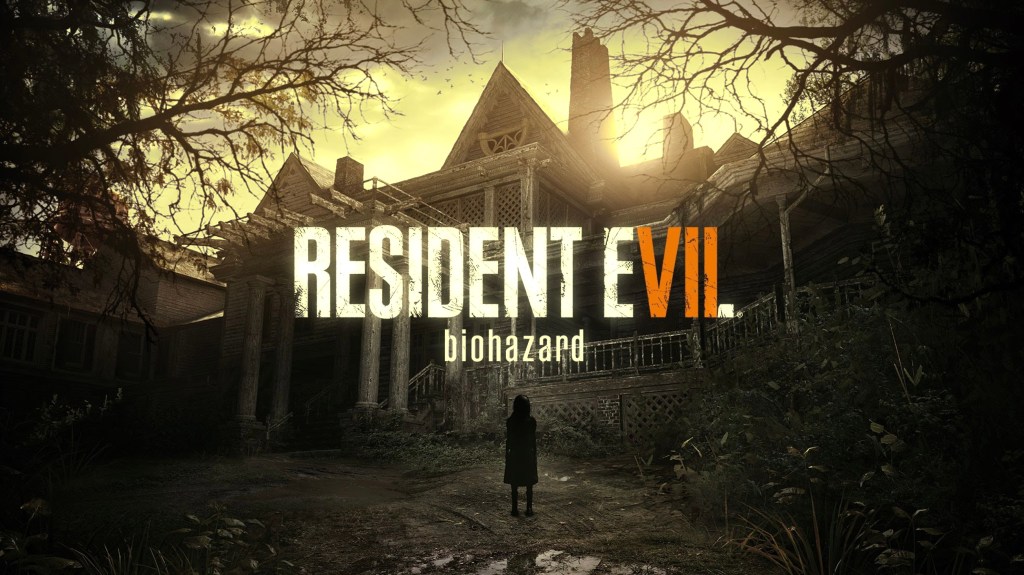
At the very top of the legendary gaming year that was 2017, every single former Japanese heavy-hitter (save for the still-absent, pachinko-obsessed Konami) sat poised and ready to unleash its own critically-acclaimed title on the western world: Sega brought Yakuza 0, shortly followed by Persona 5; Koei Tecmo brought Nioh, Bandai Namco brought Tales of Berseria; and Square Enix brought Nier: Automata. That opening quarter was a phenomenon, a perfectly-timed salvo of meaningful quality, and it brought (metaphorical) tears to the eyes of every old-head with nostalgia for the good old days. Very suddenly, Japanese big-budget console gaming was back, but that message only hit so hard because on top of all that goodness, Capcom also brought Resident Evil VII: Biohazard.

Bolstered by a brand-new, insanely impressive in-house game engine, appropriately titled the RE Engine (which stands for “REach for the Moon” because of course it does), RE7 left behind as much bloated series baggage as it could, instead leveraging the immense popularity of first-person indie horror games (and contemporary short-lived VR optimism) to sneak in that time-honoured Capcom lock-and-key level design on its way to breaking sales records all over the world. Every step on the game’s journey, from that sucker-punch title reveal to the last of many well-received DLC adventures, was met with a warm glow from critics and the public alike. The instant survival-horror classic represented a stunningly smart turnaround for Capcom on paper, but the reality of the ensuing years would prove to be even more impressive.

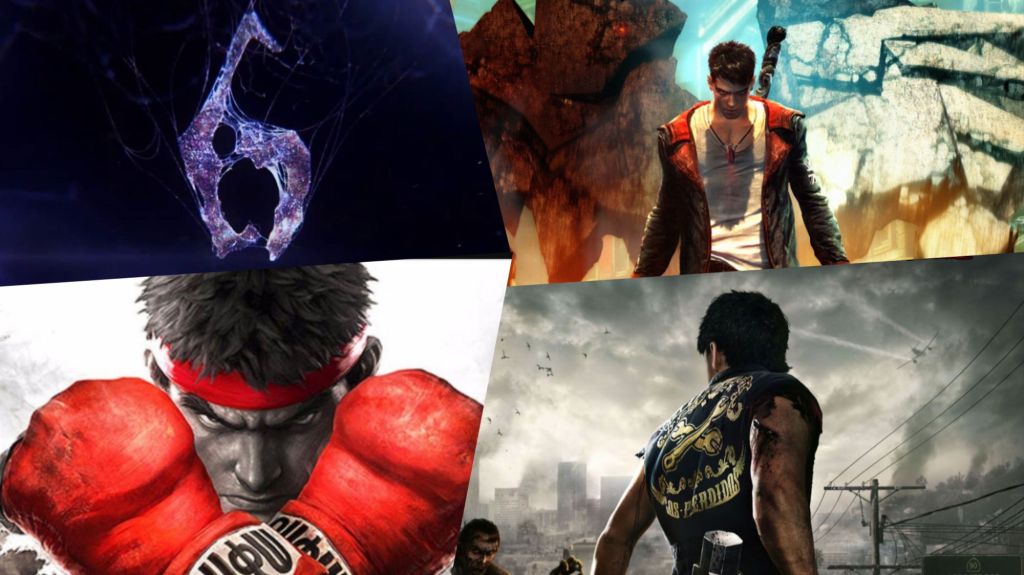
In short, at the time of writing, Resident Evil VII is one of Capcom’s ten all-time top-selling game releases, and the other nine have all launched in the years since. That’s right; after more than forty trips around the sun in the videogame business, one of the industry’s most influential companies does not have a single title from before 2017 in its all-time top ten. That’s unheard of. I’m not sure I’ve seen anything else like it. Almost every development house under the Capcom umbrella is producing its own well-balanced concoction of resonant gameplay appeal, and the result is what I like to call “The Capcom Streak”. Your mileage may vary, but personally I don’t believe these people have put out a bad game for eight years, and at an average of two games per year in this modern era of crazy-long dev cycles, that’s an incredibly impressive feat. No other major publisher is hitting those numbers in both quantity and quality, and that’s worthy of a quick breakdown if you ask me.

Continue reading
Best of 2025 Closer

I don’t know about you, but 2025 was a long year for me – in a good way – and I have no intention of letting 2026 blow past uneventfully either. But there was a great deal of closure in entertainment media last year: Hollow Knight: Silksong, Hades II‘s full release, the Switch 2 console, the Fantastic Four in the MCU, the debut of the all-new “DCU”, and the (likely) end of the Mission Impossible saga all became realities at last after years of hype, Xbox completed its transformation into a third-party publisher after years of… the opposite of hype, and this site finally hit at least a-post-per-month inside one calendar year, which has been a goal of mine for a decade. After all that, it kinda feels like massive targets for anticipation are running low, and the prospect of 2026 carries a fair amount of uncertainty.

That is, until you take a glance at the release schedule.

Christopher Nolan’s The Odyssey dwarfs everything else on the film calendar, but Iñárritu, Fennell, Spielberg and Eggers are set to join him on the film-bro-favourite dias with Digger, Wuthering Heights, Disclosure Day, and Werwulf respectively (though that last one sadly may not make 2026 here in Aus). The morbid curiosity of millions of nerds will converge when Avengers: Doomsday and Dune Part Three both allegedly land on December 18 – less than a week before I post my first movie-related countdown of the year. The anxiety will be real, but before then we will have seen a new Spidey, James Gunn-universe takes on both Supergirl and Clayface, a new Michael Jackson biopic, the debut of The Mandalorian on the big screen, The Super Mario Galaxy Movie, and new cinematic incarnations of both Mortal Kombat and Street Fighter.

And speaking of which, we’ve got another promising year of fighting games brewing! Riot Games’ 2XKO will be properly out within weeks of this post, with Invincible VS and Marvel Tōkon: Fighting Souls set to join the arena by year’s end. Elsewhere Capcom will be looking to extend ‘The Streak’ with Resident Evil Requiem and Pragmata, Bond will be back in gaming where he belongs with IOI’s 007 First Light, Nintendo’s first full year with the Switch 2 looks stacked with quality support (Fever, Fortune’s Weave and Duskbloods, baby), and Valve’s promising Steam Machine will test just how big of a gap Microsoft has left in the hardware space.

Of course, one question looms above all others: will the “before GTA 6” memes FINALLY end? But for me, it’s all about the keys The Pokemon Company and Square Enix still hold to my heart. Pokemon’s 30th anniversary promises an imminent Gen 10 announcement, but I just cannot wait for the release of Pokemon Champions and all of the battling community implications to follow. As for Square, well, they really could make 2026 something special by dropping trailers for Dragon Quest XII or the finale of the Final Fantasy VII remake trilogy – let alone releasing either game.

But before all that potential chaos goes down, here are the links to all ten countdowns (and all 100 countdown items) that look back on the best of 2025:

-◊-◊-◊-◊-

Top 5 Disappointments

Top 10 Game Re-Releases & Expansions

Top 10 Movie Characters

Top 15 K-Pop Singles

Top 5 Game Consoles

Top 10 Movie Scenes

Top 10 Gaming Moments

Top 10 K-Pop Albums

Top 15 Games

Top 10 Movies

-◊-◊-◊-◊-

Best of 2025: Top 10 Movies

As we close out another year, it’s worth taking one final beat to appreciate how good we had it in the cinema in 2025. Despite how much time (and money) I spend watching movies in a given year, this final countdown is often something I just smash out in one session in the post-feverish haze right after I’ve put my whole life force into the Games list, and before the New Year’s celebrations begin. This year I couldn’t quite do that; it was just so difficult to cut the list down to a mere ten, let alone decide which film to put above the rest in a slot that really felt quite arbitrary in 2025. We definitely did have it good.

IMAX’s first full year back in Sydney since the advent of Letterboxd culture was a properly stacked one; I visited six times in 2025 and loved every session, and that’s because the year delivered high-end action on a scale rarely seen. There was plenty of sub-genre variety within that action, too, so even though that’s probably the biggest theme throughout the list, I never felt things were getting too samey. It’s also pleasing to realise as I type this that just one movie on the list was a streaming exclusive.

Anyway, from the 31 new-release films I saw in 2025 (not including anything released after December 15th, sadly), these are my ten favourites. Thanks for reading this year.

-◊-◊-◊-◊-

VR BEST OF 2025 DISCLAIMER

This list represents my opinion only. I am not asserting any kind of superiority or self-importance by presenting it as I have. My opinion is not fact. Nobody ever agrees with me 100%. Respectful disagreement is most welcome.

-◊-◊-◊-◊-

10. K-Pop Demon Hunters

Coming in for its fourth and final main-list mention this month – a tied Vagrant Rant record – the unlikely flint that re-ignited the K-Pop scene for yet another new generation kicks off our final top ten. It rises above an extremely competitive field thanks to the inimitable, whimsical Sony Animation style that, as the Spider-Verse movies have made abundantly clear, tends to bowl critics over en masse. Just as heartwarming, however, is the career boosts for the large squad of talented would-be (and in some cases former) K-Pop stars with great vocals and/or production talent that didn’t quite fit into the industry. Much like the last big Sony movie from this team, KPDH does feel like it ends way too quickly, but the journey there is a blast.

9. Weapons

Marketed as a horror movie, formally a mystery caper, secretly a dark comedy; Zach Cregger’s Barbarian follow-up is a slippery film to categorise, but it absolutely hums along for the majority of its run time. You might accuse the pulp-novel-esque structure, which shifts perspectives like book chapters, of cutting the story’s tension a bit, but it also enriches the small-town community vibe, lines up some killer callbacks, and shares the spotlight among a committed cast who each take out a Jenga piece until everything comes crashing down. Immensely engaging to unravel as you watch, just as meaty to unpack thematically afterwards, Weapons officially makes Cregger a directorial voice worth keeping an ear on.

CLICK HERE TO KEEP READING